Buying guides
Draw the AI map before you buy another tool
Start with a customer request. Follow the answer, the source and the action, then decide which purchase would remove a real gap.
Read the articleBuying guides
Start with a customer request. Follow the answer, the source and the action, then decide which purchase would remove a real gap.
Read the articleOverlapping features are easy to spot. Overlapping work is harder. Use one task and one cost sheet to decide whether to keep, connect or replace.
Read the articleThe assistant, search service and action tool may all have owners. The work still needs one person who can follow a request across them.
Read the articleA promising fit for a CIO adding supported automation to an existing mix of assistants and search tools. Keep the first brief narrow enough to prove the connections and ownership before expanding.1,2,3
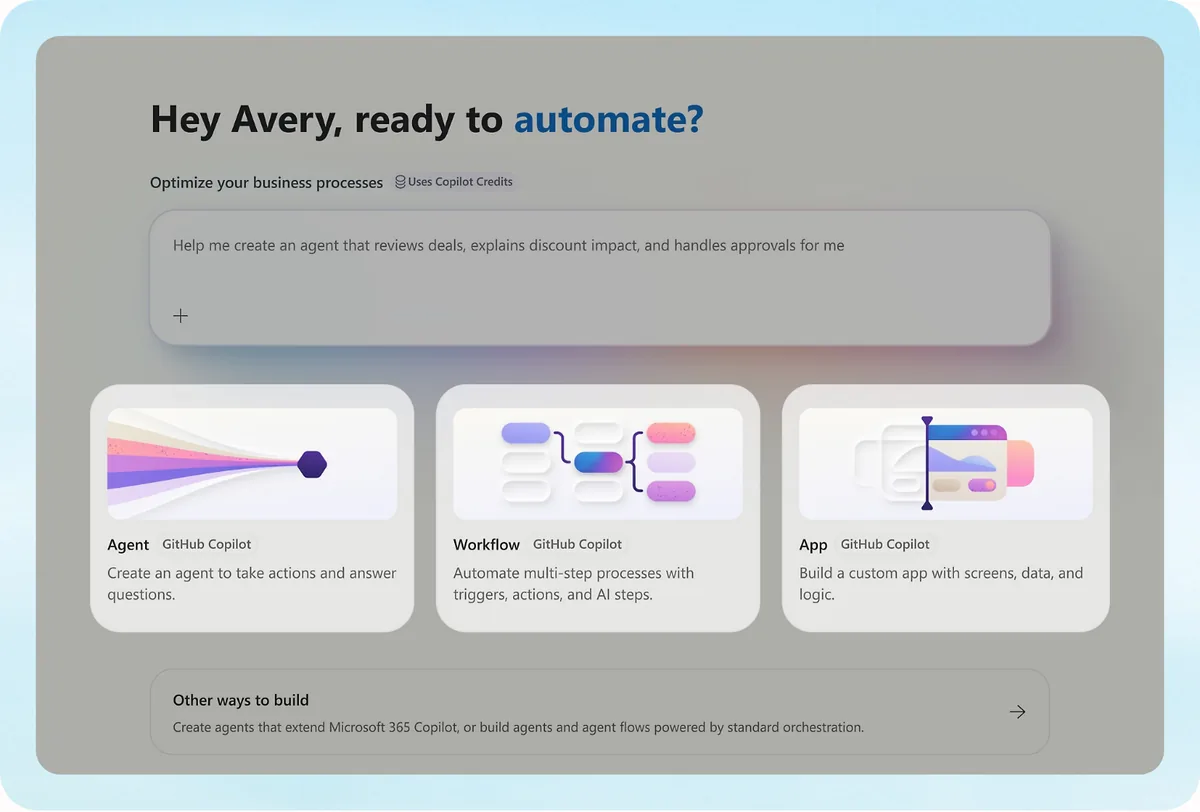
Start here if your Power Platform colleagues will build and run the agents. Microsoft documents a route from making an agent to approving its release, alongside knowledge access and tenant controls.4,5,6,7
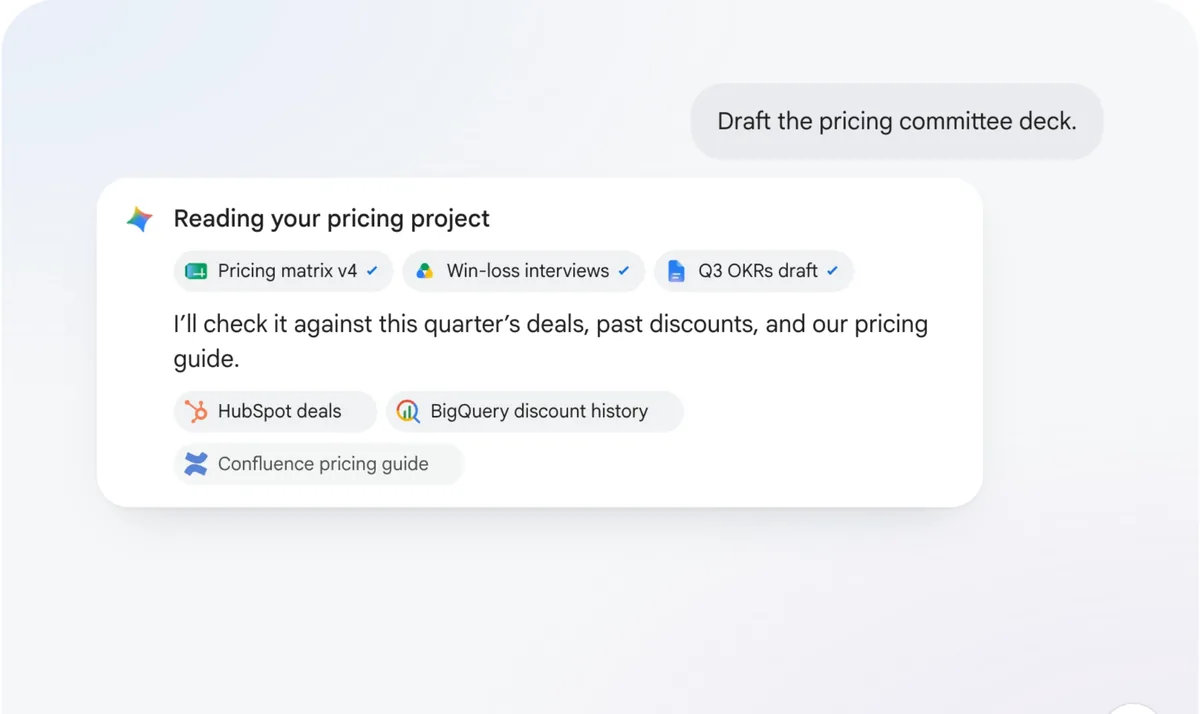
A broad starting point for teams already comfortable with Google Cloud. Separate the employee app from the platform used to build agents before comparing scope, responsibilities or price.8,9,10
Full comparison
Choose which providers to keep, then focus the evidence on one buying criterion.
Choose at least one provider to compare.
A promising fit for a CIO adding supported automation to an existing mix of assistants and search tools. Keep the first brief narrow enough to prove the connections and ownership before expanding.1,2,3
Avoid when: Your immediate need is only company-wide search or a ready-made research workspace.
Nexus positions its product as self-operating procedures and describes an AI layer above existing systems.11,1
Nexus says agents read live data during execution.12
Nexus describes bidirectional integration and escalation to a person when an agent is uncertain.13,14
Nexus describes role-based access and a launch check covering data flow, access and logs.15,16
Nexus describes an engineer building the first procedure with the customer. It separately confirms consultant-led engagements and pricing per role automated.2,17
Start here if your Power Platform colleagues will build and run the agents. Microsoft documents a route from making an agent to approving its release, alongside knowledge access and tenant controls.4,5,6,7
Avoid when: You need a supplier to take ownership of the first process but have not included that work in the purchase.
Microsoft describes a studio for custom agents and workflows, with agents publishable to Microsoft Copilot.18,19
Knowledge can come from Copilot connectors indexed by Microsoft Search. User authentication limits answers to accessible content.20,6
Microsoft documents agent creation and release pipelines with approval gates.4,5
Microsoft lists Entra ID and conditional access, with data policies managed in Power Platform.21,7
Makers can test before publishing; Microsoft documents release approval gates and maker audit logs in Purview.4,5,22
A broad starting point for teams already comfortable with Google Cloud. Separate the employee app from the platform used to build agents before comparing scope, responsibilities or price.8,9,10
Avoid when: The proposal treats the app subscription as the entire cost or assumes all editions and regions have the same controls.
Google describes search, an assistant and agent tooling; the app and Agent Platform are separate purchases.8,9
Google names connectors including Confluence, Jira, SharePoint and ServiceNow, and lists source access controls for enterprise editions.23,10
Google documents a unique identity for each agent and rules governing tool use.24,25
Enterprise editions use IAM, Workforce Identity Federation and source access lists.10
Google offers a no-code workbench. The app bills per seat and the Agent Platform by consumption.26,27,28
A strong candidate when employees cannot find information across their tools and source permissions matter. Its index can also serve other interfaces, making the existing search investment part of an agent discussion.29,30,31
Avoid when: The project depends on agent policies marked coming soon in the reviewed material.
Glean describes growing from enterprise search into an AI platform built on company context.32
Glean describes indexing data once for reuse through APIs, a web SDK and MCP. Source permissions apply to every read and write.30,31
Glean documents custom actions from OpenAPI specifications and approval before execution.33,34
Glean describes verifying requests through the customer’s SSO provider and reflecting changed source permissions in results.35,36
The reviewed security page labels enforcement of agent policies and separate policies for selected agents or users as coming soon.37,38
Worth a separate look for marketing and revenue work, especially when the department wants delivery help. Specify WRITER Agent, Agent Builder or another product explicitly; their connection and control coverage differs.39,40,41,42
Avoid when: A required connection or control is documented only for a different WRITER product.
WRITER describes Playbooks built from natural-language requests and a context layer called Enterprise Brain.43,44
Enterprise Brain is described as the context layer grounding agents.44
WRITER Agent uses connectors to act in existing tools, with custom connectors based on OpenAPI or MCP.45,46
WRITER describes least-privilege roles and permission controls through an identity provider and Agent profiles.47,48
WRITER offers embedded transformation leads and deployment engineers. Enterprise pricing comes from sales.40,49
Give Hebbia a specialist brief: document-heavy work for finance and deal teams. Source-linked findings and named deal-data connections are more relevant here than a broad company-wide connector count.50,51,52
Avoid when: The main requirement is general-purpose updates across operational systems without a demonstrated route.
Hebbia describes Max researching deals and producing spreadsheets, slides and reports with traceable findings.53,51
Hebbia names search over Datasite deal rooms and SharePoint documents, alongside internal data and market feeds.52,54,55
Can Hebbia make the operational changes your process needs, with approval and a result your team can verify?
Hebbia describes customer-isolated data, restricted staff production access and records of who accessed data.56,57,58
Who sets up the first analysis, supports the analysts and maintains the connections?
A useful candidate for teams that want to build and share agents themselves. Its documented search, source selection and identity groups give internal builders concrete settings to work with.59,60,61,62
Avoid when: The project assumes every user and audit feature fits a team plan, or leaves maintenance unassigned.
Dust includes a default assistant and supports agents built around company knowledge and tools.63,59
Dust documents semantic search over selected sources, with administrators choosing synced channels, folders and pages.60,61
Dust documents tools acting on services including Salesforce, Gmail and HubSpot through MCP servers.64
Dust separates what agents can access from who may use them. Identity-provider groups sync through SCIM, and group permissions add together.65,62,66
Dust offers self-serve team plans and enterprise discussions covering deployment, governance and support. Enterprise lists priority support with an SLA.67,68
From the archive
Seven enterprise AI vendors ranked for a CIO who must map the whole estate of assistants, search and agents, with a section per vendor, the criteria, a buyer's guide and a checklist.
Read the articleYour existing Microsoft team will own the agents.
Published maker tools, release approvals and tenant policies may fit that team better than a separate delivery arrangement.4,5,7
Trade-off: Check the knowledge limits and action accounts. Familiar administration does not remove those design decisions.69,6
Employees first need to find trustworthy information across applications.
Glean’s shared index and source-permission descriptions directly address that need. Put it ahead of broader automation in that buying decision.30,31
Trade-off: Evaluate the agent work separately, especially policies labeled coming soon in the reviewed release.37,38
The finance team needs to compare deal files and trace findings.
Hebbia’s document analysis and Datasite integration give the evaluation a clear specialist focus.51,52
Trade-off: Ask separately about downstream operational changes; its API announcement does not establish that those are ready for your process.70
Internal builders want a shared workspace for department agents.
Dust documents a self-serve route with selected source access and synced identity groups. That can suit a team prepared to run its own service.67,61,62
Trade-off: Include Enterprise when audit logs are required, and assign maintenance before inviting the wider team.71,67


